How Medical Practices Can Profit from CCM & RPM Programs
Announcing the Release of the CCM & RPM Revenue Playbook
An All-Encompassing Guide to Starting and Scaling a CCM and RPM Program
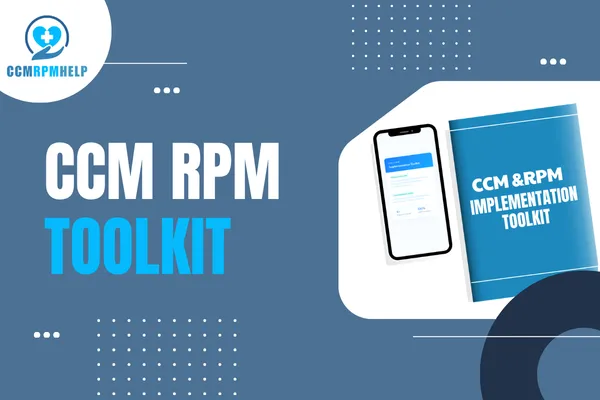
We are excited to announce the release of the CCM & RPM Playbook — a comprehensive 70 page implementation guide created for medical practices, CCRCs, pharmacists, and third-party healthcare groups that want to launch, manage, and scale successful Chronic Care Management (CCM) and Remote Patient Monitoring (RPM) programs.
CCM and RPM are no longer niche Medicare programs that only a handful of organizations understand. They have become a major opportunity for groups looking to improve patient care, strengthen ongoing engagement, and unlock meaningful recurring monthly revenue. The challenge is not whether these programs work. The challenge is that many organizations still do not know where to start, how to stay compliant, or how to build a model that can scale.
That is exactly why this playbook was created.
The CCM & RPM Revenue Playbook was built to give healthcare organizations a practical roadmap for implementation. Instead of piecing together scattered information, unclear billing guidance, and generic advice, this guide brings everything into one place — strategy, structure, workflow, tools, and revenue clarity.
The Revenue Opportunity Is Significant
Here is what the math can look like for a practice that gets this right:
100 CCM patients: approximately $10,000 per month
100 CCM + RPM patients: approximately $21,100 per month
150 patients combined : over $30,000 per month in recurring Medicare reimbursements
This is not theoretical. These are CMS reimbursement rates applied to a standard patient panel. Practices that have implemented these programs correctly are generating six to seven figures in predictable recurring revenue without expanding their physical footprint or hiring more physicians.
For many organizations, the opportunity is already sitting inside their existing patient population. They do not need more patients. They need the right structure to better serve the patients they already have.
Who Can Benefit from These Programs?
The value of CCM and RPM extends across multiple healthcare models.
Independent practices are often in one of the best positions to benefit. They already have patient relationships, flexible workflows, and the ability to move faster without layers of bureaucracy.
Continuing Care Retirement Communities (CCRCs) serve a population where many residents qualify for ongoing chronic care support. A well-run CCM and RPM strategy inside a CCRC can create substantial recurring revenue while improving patient oversight and helping reduce hospitalizations.
Pharmacists and clinical staff can play a major role as clinical staff under CMS guidelines. From structured follow-up to care plan support and ongoing patient touchpoints, pharmacist-led and clinically supported models can be both impactful and compliant.
Third-party management groups have also built strong business models around managing these programs on behalf of physician practices. CMS supports this structure, and the playbook outlines how to think through, structure, and evaluate those arrangements correctly.
Why Most Practices Haven’t Done This Yet
The biggest issue is not demand. It is uncertainty.
Many groups simply do not know where to start. CCM and RPM come with Medicare requirements around documentation, patient eligibility, billing, consent, and time tracking. Without a clear roadmap, many organizations push the opportunity aside before it ever gets off the ground.
Others assume the workflow is more difficult than it really is. There is often a belief that launching these programs requires major disruption, large staffing investments, or entirely new operations. In reality, with the right workflows in place, a single medical assistant or outsourced clinical team can often manage a 100 patient CCM panel efficiently.
And many groups have never seen the numbers presented clearly. Too often, the conversation gets buried in CPT codes and reimbursement language. What decision-makers actually need is a clear picture of the revenue opportunity, expected workflow, cost to operate, and net potential at different patient volumes.
Introducing the CCM & RPM Revenue Playbook
The CCM & RPM Revenue Playbook is designed to answer those questions and guide organizations from concept to execution.
Inside the playbook, readers will find:
Section 1 — Understanding the Programs
A plain-language breakdown of how CCM and RPM work, who qualifies, what Medicare requires, and why the compliance process is more manageable than most groups assume.
Section 2 — Building Your Program
Step-by-step guidance on how to structure your team, identify eligible patients, enroll them correctly, track monthly time, and submit accurate claims. This section also includes a practical 30 day launch plan.
Section 3 — Tools, Templates & Worksheets
Care plan templates, enrollment scripts, workflow checklists, monthly time tracking tools, and KPI dashboards in formats that can be adapted to your organization.
This playbook is more than information. It is a working guide designed to help healthcare groups move faster, avoid common mistakes, and build programs with a stronger operational and financial foundation.
What This Means for Your Practice
If your organization has 100 chronic patients — and most do — you may already have the foundation for a $10,000 to $21,000 per month recurring revenue program that operates largely outside of the traditional appointment schedule.
That kind of opportunity can change the financial profile of a practice, support better patient care, and create new ways for clinical staff to contribute to revenue-generating activity.
The investment to get started is the cost of the playbook. Many groups that follow the 30 day launch strategy can recoup that investment in their first month of billing.
The CCM & RPM Revenue Playbook is now available for organizations ready to stop delaying, start building, and launch these programs the right way.